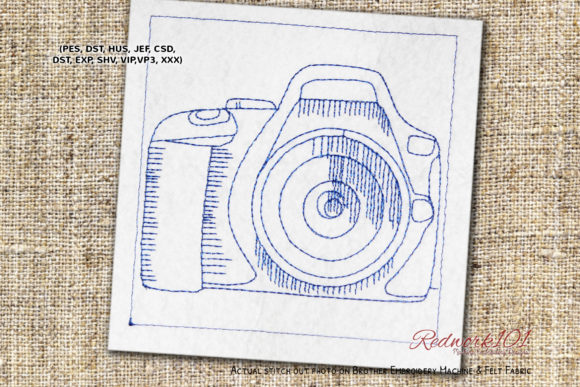
Exploring Digital Camera Redwork for Your Embroidery
As an experienced designer and embroidery enthusiast, I recently had the opportunity to review Digital Camera Redwork. This design caught my eye with its clean, modern aesthetic and versatile appeal. Let's dive into how it performs in real-life embroidery projects.
A First Impression: Clean and Modern
The Digital Camera Redwork design exudes a contemporary, minimalist vibe. The camera motif is well-defined, with a balance of simplicity and detail that makes it perfect for a wide range of embroidery projects. The optional box stitch adds a subtle frame, enhancing the overall visual appeal without overwhelming the main subject.
Ideal for Custom Apparel and Handmade Products
One of the standout features of Digital Camera Redwork is its versatility. It's ideal for custom apparel like t-shirts and sweatshirts, where a clean, modern design can make a statement. For handmade products, this design can elevate items such as tote bags, aprons, and pillow covers, adding a touch of sophistication and personalization.
- Tote Bags: A simple yet stylish addition, perfect for craft fairs or boutique shops.
- Sweatshirts: Adds a modern, artistic touch, making it a great choice for personalized gifts.
- Pillow Covers: Enhances home decor with a unique, handcrafted feel.
Practical Considerations for Real-World Use
While Digital Camera Redwork is highly versatile, there are some practical considerations to keep in mind. Here’s what you need to know before stitching:
- Test on Scrap Fabric: Always start by testing the design on scrap fabric to ensure it meets your expectations.
- Thread Color Contrast: Choose thread colors that provide good contrast against the fabric, especially if you're using dark or textured materials.
- Stitch Density: Review the stitch density to ensure it’s suitable for the fabric and the intended use. Dense areas may require a heavier stabilizer.
- Hoop Size: Confirm the hoop size required for the design. Smaller hoop sizes may limit the design's placement and clarity.
- Fabric Texture and Type: Be cautious with textured, thin, or stretchy fabrics. These may affect the design's appearance and durability.
Where to Use Carefully
While Digital Camera Redwork is generally adaptable, there are specific scenarios where extra care is needed:
- Small Hoop Sizes: The design may not fit well in very small hoops, potentially leading to distortion.
- Textured Fabrics: Textured fabrics can make the design less clear, so choose smooth, stable fabrics for the best results.
- Dark Fabrics: Ensure the thread color provides enough contrast on dark backgrounds to maintain visibility.
- Curved Surfaces (e.g., Caps): The design may not align perfectly on curved surfaces, so test it on a flat surface first.
Enhancing Visual Appeal and Product Value
Using Digital Camera Redwork can significantly enhance the visual appeal and perceived value of your embroidered products. Its clean, modern look can make your handmade items stand out, whether they are for personal use, as gifts, or for sale in your Etsy shop or small business.
Customers appreciate the attention to detail and the professional finish that a well-executed embroidery design brings. This design, with its balanced simplicity and elegance, can help build trust and recognition, making your products more appealing and memorable.
Final Thoughts and Practical Tips
Before incorporating Digital Camera Redwork into your embroidery projects, here are some final tips:
- Check Thread Colors: Experiment with different thread colors to find the best match for your project.
- Use Proper Stabilizer: Select the right stabilizer based on the fabric type and design complexity.
- Mockups and Previews: Create black and white mockups to visualize the design on different backgrounds and in various sizes.
- Licensing: If you plan to sell finished items or digital products, confirm the licensing terms to ensure compliance.
In conclusion, Digital Camera Redwork is a versatile and stylish embroidery design that can add a modern, sophisticated touch to a variety of projects. With careful planning and testing, it can become a valuable asset in your embroidery toolkit, enhancing both the quality and appeal of your handmade and commercial products.